


Why NZ Commercial Nurseries Rely on Seedlingtrayexperts Plug Trays
Discover why New Zealand growers, native plant propagators, and forestry nurseries choose Seedlingtrayexperts for high-UV resistant, rigid seedling trays built for automation and healthy root systems.
Richard
8/3/20264 min read


Why New Zealand Commercial Nurseries Rely on Seedlingtrayexperts Plug Trays
By Richard | Product & Sales Manager at Seedlingtrayexperts
Over the past four years, our supply footprint across New Zealand has expanded significantly. From vegetable plant raisers in the Waikato and Bay of Plenty to native re-vegetation nurseries in Canterbury and forestry seedling operations in Rotorua, commercial growers across New Zealand are increasingly standardizing their operations on our propagation tray systems.
When nursery managers contact me to discuss repeat container orders, their requirements are clear: they need plug trays that hold up against Southern Hemisphere UV exposure, feed smoothly through automated soil-filling and sowing equipment, and prevent root spiraling.
Here is an engineering and operational breakdown of why our seedling trays have gained strong traction across New Zealand’s commercial horticultural sector.
1. High-UV Resistance Formulated for Southern Hemisphere Sunlight
New Zealand experiences high levels of ultraviolet radiation during the peak spring and summer growing months. Standard thin-gauge polystyrene (HIPS) plug trays imported without proper UV additives become brittle, develop micro-cracks along the cell walls, and crumble after one or two growing cycles under open sunlight or light poly-tunnels.
At Seedlingtrayexperts, we formulate our high-impact polystyrene (HIPS) and polypropylene (PP) sheet materials with carbon black compounds and hindered amine light stabilizers (HALS).
Multi-Season Reusability: Nursery staff can handle, stack, wash, and re-use our heavy-duty cell trays across multiple crop rotations without structural cracking.
Thermal Rigidity: Our tray walls maintain structural strength when exposed to mid-day greenhouse temperature spikes, reducing rim sagging during manual carrying or conveyor line transit.


2. Internal Root Guide Ribs and Air Pruning Performance
In New Zealand’s forestry sector (particularly Radiata pine production) and native plant propagation (such as Manuka, Kanuka, and Hebe), root quality determines field survival. Circular root wrapping inside smooth-walled cell trays creates root-bound seedlings that fail to anchor properly after outplanting.
We designed our plug molds with specific structural features to guide root development:
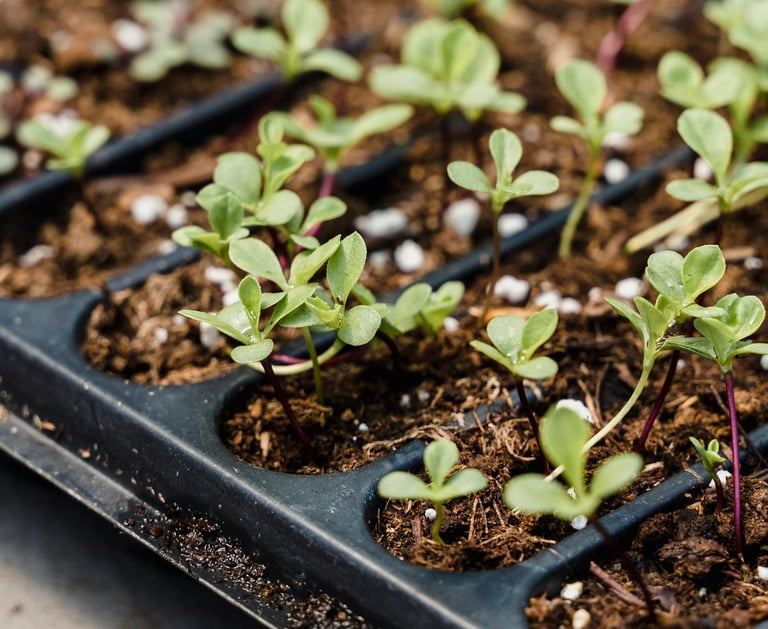
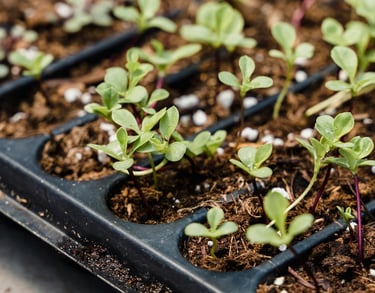
Vertical Root-Guide Ribs: Internal vertical ridges inside each cell direct primary roots downward toward the base drainage hole, stopping horizontal root wrapping before it starts.
Calibrated Bottom Openings: Drainage holes are sized to balance water retention with active bottom air-pruning, stimulating dense lateral fibrous root branching for cleaner plug extraction.
3. Dimensional Precision for Nursery Automation Lines
Rising labor costs in New Zealand have pushed commercial nurseries to automate soil filling, tray denesting, mechanical sowing, and automatic transplanting. Trays with inconsistent outer dimensions or flexible sidewalls cause mechanical jams and halt production lines.
We strictly control molding parameters and sheet thickness tolerances:
Outer Dimension Tolerance with ±0.5 mm variance, and advantage of Fits standard NZ automated seeding lines and denesters without jamming.
Stacking Denesting Lugs with Molded anti-jam stops, and Prevents trays from locking together when nested tightly on shipping pallets.
Reinforced Rim Flanges with Thickened perimeter lip, and Prevents warping under payload weight on overhead roller conveyors.


4. Tray Specifications Matched to Key New Zealand Crops
Different plant species demand specific cell volumes and plant densities. We supply New Zealand growers with tray configurations tailored to their crop cycles:
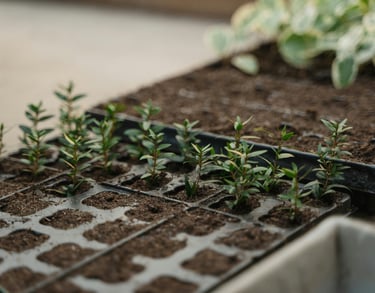
128 & 200 Cell Plug Trays: Popular among high-density vegetable seedling raisers producing brassicas, lettuce, and tomatoes for field planting.
72 & 50 Deep Cell Trays: Widely used for berry fruit cuttings, native shrub propagation, and kiwifruit rootstock establishment.
Deep Tree Propagation Trays: Heavy-gauge deep-cell designs engineered specifically for forestry nurseries and shelterbelt tree production.

5. Direct Factory Production & Optimized Export Logistics
As Product & Sales Manager, I work directly with nursery operations teams to calculate container loading densities. We nest and pack our trays on heavy-duty export pallets, maximizing unit capacity per 20ft or 40HQ container shipped directly into Auckland, Tauranga, Lyttelton, or Napier ports.
Because we control our production tooling, we can adjust material thickness, modify bottom drainage profiles, or integrate custom rim branding for large-scale New Zealand nursery groups.


Work with Seedlingtrayexperts for Your Next Growing Season
If you manage a commercial nursery, timber propagation facility, or plant distribution business in New Zealand and need reliable, UV-stabilized seedling trays built for commercial use, our team is ready to help.
Reach out directly via Seedlingtrayexperts.com to request sample trays for trial evaluation, technical spec sheets, or full container freight quotes for your upcoming season.
Phone
+86 152 0519 0013
richard@seedlingtrayexperts.com
Quality
Wholesale seedling trays for plant propagation needs.
Expertise
Service
richard@seedlingtrayexperts.com
+86 15205190013
© 2008-2025. All rights reserved. Suzhou Keyanuo Plastic Co., Ltd Copyright. Privacy policy. Terms and conditions.