


Seed Trays for Hydroponic Farming
Hydroponic farming is a modern agricultural method that grows plants without soil, using nutrient-rich water solutions instead.
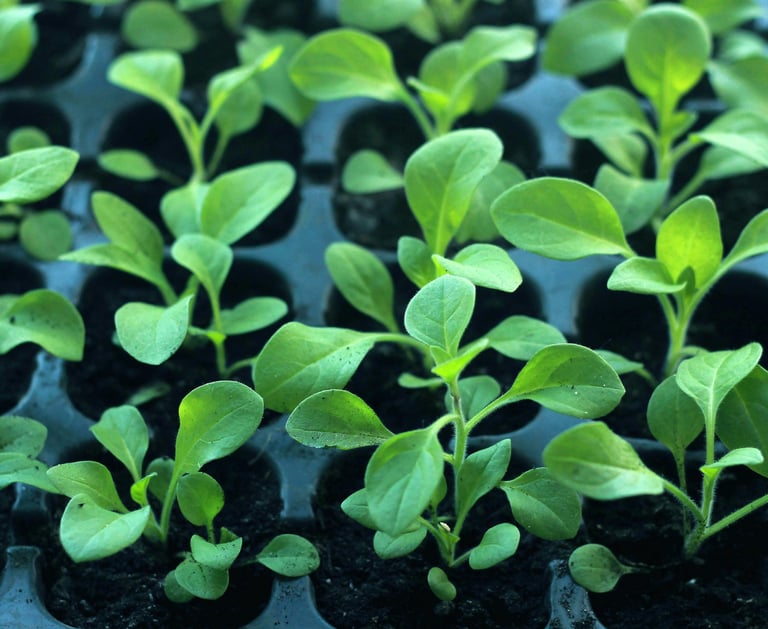
In this system, seed trays are essential for the initial germination and seedling stage, ensuring plants develop strong roots before being transferred into hydroponic systems.
For commercial growers, seed trays play a critical role in achieving consistent, scalable, and high-efficiency production.
Why Seed Trays Are Essential in Hydroponics


Controlled Germination Environment
Seed trays provide a stable environment for seeds to germinate before entering hydroponic systems.
consistent moisture levels
uniform seed placement
reduced external contamination


Uniform Seedling Development
Each cell allows seedlings to grow independently, ensuring:
even growth rates
consistent plant size
better system performance


Clean and Soil-Free Start
Hydroponic farming requires a clean growing process.
Seed trays help:
reduce contamination risks
maintain hygiene standards
support soilless cultivation
Efficient Transition to Hydroponic Systems
Seed trays allow easy transfer of seedlings into:
NFT systems
DWC systems
vertical farming setups
Common Hydroponic Applications
Leafy Greens Production
Seed trays are widely used for:
lettuce
spinach
arugula
These crops benefit from high-density tray systems.
Vertical Farming Systems
Seed trays are a key component in vertical farming, enabling:
modular planting
space optimization
scalable production
Herb Cultivation
Ideal for hydroponic herbs such as:
basil
mint
parsley
Commercial Hydroponic Farms
Used in large-scale operations to standardize seedling production and improve workflow efficiency.


How Seed Trays Improve Hydroponic Efficiency
Standardized Seedling Production
Seed trays create a repeatable process that ensures consistent output across growing cycles.


Space Optimization
High-density tray designs maximize greenhouse or indoor farming space.
Compatible with:
automatic seeding machines
irrigation systems
conveyor-based transplanting systems
Automation Compatibility


Reduced Labor Costs: Structured trays simplify handling, reducing manual work and increasing efficiency.
Choosing the Right Seed Tray for Hydroponics
Cell Size Selection
128 / 200 cells → leafy greens and herbs
smaller cells → high-density systems
uniform cells → consistent nutrient uptake


Material Requirements
Hydroponic trays should be:
durable and reusable
water-resistant
suitable for frequent cleaning
Proper drainage ensures:
healthy root aeration
prevention of waterlogging
compatibility with hydroponic media
Drainage and Design


Why Choose Our Seed Trays
At SeedlingtrayExperts, our seed trays are designed specifically for hydroponic farming applications:
precise cell structure for uniform growth
durable materials for repeated use
optimized for soilless systems
factory-direct supply for bulk buyers


Conclusion
Seed trays are a critical component in hydroponic farming systems.
They ensure consistent germination, improve operational efficiency, and support scalable production for commercial growers.
Choosing the right seed tray solution is essential for maximizing the performance of any hydroponic system.
Frequently asked questions
Why are seed trays important in hydroponic farming?
Seed trays provide a controlled environment for germination, ensuring uniform seedlings before transferring them into hydroponic systems.
What type of seed tray is best for hydroponics?
High-density trays such as 128 or 200-cell trays are ideal for leafy greens and herbs commonly grown in hydroponic systems.
Can seed trays be reused in hydroponic systems?
Yes, durable plastic seed trays are designed for repeated use and can be easily cleaned for hygiene.
How do seed trays improve hydroponic production?
They standardize the seedling stage, improve transplant success, and increase overall system efficiency.
Quality
Wholesale seedling trays for plant propagation needs.
Expertise
Service
richard@seedlingtrayexperts.com
+86 15205190013
© 2008-2025. All rights reserved. Suzhou Keyanuo Plastic Co., Ltd Copyright. Privacy policy. Terms and conditions.