


What Size Seedling Tray Should I Use for Different Crops?
Find the right seedling tray size for tomatoes, peppers, lettuce, herbs & more. Expert cell count recommendations based on root depth, transplant timing & crop type.
Richard
10/18/20257 min read
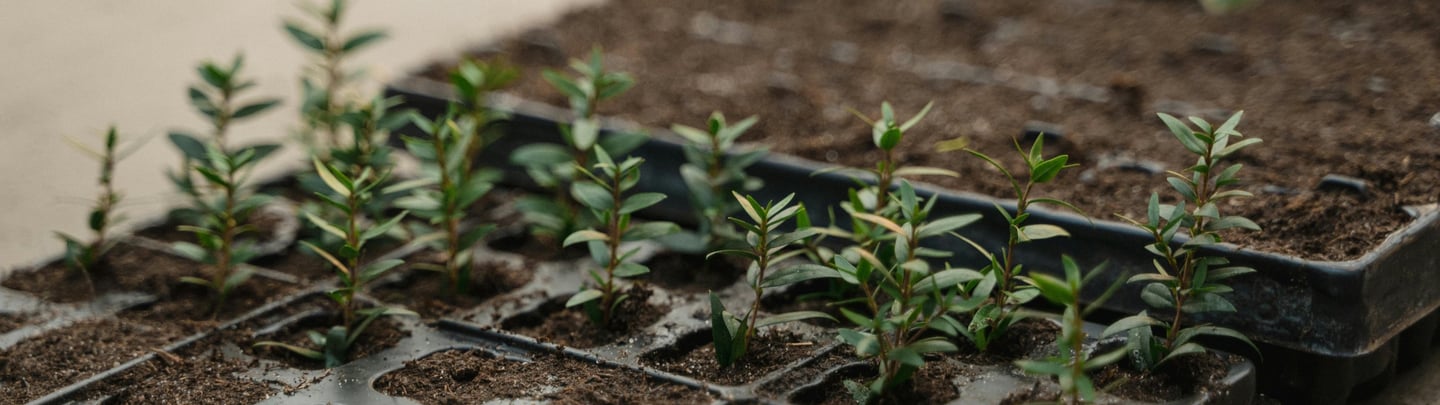
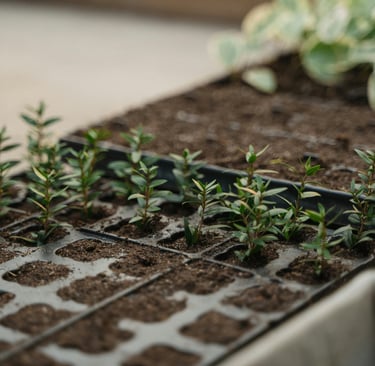
What Size Seedling Tray for Different Crops? Complete Guide 2024
Key Takeaways
Cell count ranges from 36 cells (large crops) to 512 cells (microgreens) depending on crop type
Root depth is the primary factor—deep-rooted crops like tomatoes need 2-2.5" cell depth, while shallow crops like lettuce thrive in 1-1.5" cells
Transplant timing varies from 7-14 days (microgreens) to 8-10 weeks (peppers)—match cell size to your timeline
Proper cell tray selection can improve transplant success rate by 20-30%
Commercial growers should stock 3-5 different cell counts for crop flexibility
Introduction
Choosing the right seedling tray size feels overwhelming when you're staring at catalog listings with numbers like 72-cell, 128-cell, or 288-cell. Each option promises optimal results, but the truth is: one size definitely does not fit all crops.
As the founder of Seedling Tray Experts and a former commercial greenhouse manager, I've helped thousands of growers—from backyard gardeners to large-scale nurseries—select the perfect propagation trays for their specific crops. The difference between a thriving transplant and a stunted seedling often comes down to three factors: root depth requirements, transplant timing, and cell volume capacity.
This guide provides specific, actionable recommendations for vegetable seedlings, herbs, and flowers based on scientific growing principles and real-world production data.


Understanding Cell Size and Root Development
How Cell Depth Affects Seedling Growth
Cell depth directly determines how far roots can penetrate before hitting the bottom of the container. When roots reach an impenetrable surface, they undergo root pruning—a natural process where the tip stops growing and lateral branching begins.
For deep-rooted crops like tomatoes, roots can extend 18-24 inches in mature plants. In a shallow cell tray with only 0.5" depth, these crops become severely root-bound within weeks, leading to:
Stunted vegetative growth
Early flowering (stress response)
Reduced yield potential
Transplant shock
Cell Volume and Growth Duration
Cell volume (measured in cubic inches or milliliters) correlates with:
Water retention capacity — Larger cells dry out slower
Nutrient availability — More substrate means more fertilizer retention
Root zone temperature — Greater mass stabilizes soil temperature
Transplant window flexibility — Bigger cells = longer viable transplant period
A 72-cell tray with 1.5" depth provides approximately 2.5 cubic inches of volume. A 50-cell tray with 2.5" depth offers 4.5+ cubic inches—nearly double the growing space.
The Root Pruning Principle
Modern plug trays are designed to encourage root branching rather than deep penetration. When roots contact air at the cell bottom (aeration pruning) or encounter the cell wall (air pruning), they develop a more fibrous, branching root system.
This actually benefits most crops during transplanting, as a denser root ball establishes faster in the field. However, crops with taproot preference (peppers, carrots) may suffer if root pruning is too aggressive.
Crop-by-Crop Tray Size Recommendations
Quick Reference Table
Detailed Crop Analysis
Deep-Rooted Fruiting Vegetables
Tomatoes, Peppers, and Eggplants require the most robust cell trays in your inventory. These crops develop extensive root systems—tomato roots can reach 18-24 inches depth in optimal conditions—and they spend 6-10 weeks in propagation trays before transplanting.
Recommended configuration
50-cell trays with 2.5" depth for premium production
72-cell trays with 2" depth for standard production
4x4" spacing minimum to prevent crowding
A common mistake is using 128-cell trays for tomatoes. While this maximizes tray efficiency (you grow more plants per square foot), the restricted root zone causes:
Accelerated root binding
Nutrient deficiencies despite fertilization
Height reduction (plants compensate for root limit)
Transplant shock rates exceeding 40%
Spacing tip: In 72-cell trays, maintain 6-8" plant spacing after transplanting to accommodate mature canopy development.
Shallow-Rooted Leafy Greens
Lettuce, spinach, arugula, and Asian greens have root depths of only 6-8 inches even at maturity. These crops complete their seedling phase in 3-4 weeks, making them ideal candidates for high-density cell trays.
Recommended configuration:
128-cell trays with 1.25" depth for salad mixes
200-cell trays with 1" depth for baby leaf production
288-cell trays for micro lettuce and specialty greens
The shallow root system of lettuce means you can push density higher without worrying about root competition. In commercial production, 200-cell trays generate 20,000 plants per 4x8' tray compared to 7,200 plants from 72-cell trays—a 178% increase in production efficiency.
Critical timing: Lettuce seedlings become susceptible to bolting (premature flowering) when root-bound. Transplant within 7-10 days of true leaf emergence.
Vine Crops: Cucumbers, Squash, and Melons
These crops grow explosively—a cucumber seedling can triple in size within 7 days under optimal conditions. They require:
36-50 cell trays maximum
2.5-3" cell depth for adequate root development
Transplant timing of 3-4 weeks maximum
Vine crops are notoriously sensitive to transplant shock. Root disturbance causes immediate growth cessation lasting 7-14 days. Larger cells with more intact root balls minimize this setback.
Professional insight: Commercial cucumber growers in the Netherlands (producing 1.2 million tons annually) exclusively use 40-cell trays with 3" depth for consistent, rapid field establishment.
Brassicas: Broccoli, Cabbage, Cauliflower, Kale
Brassica crops occupy a middle ground—moderate root depth of 12-18 inches at maturity, 5-7 week seedling periods, and good transplant recovery.
Recommended configuration:
72-cell trays with 1.75" depth for heads (broccoli, cabbage)
128-cell trays with 1.5" depth for bunching crops (kale, collards)
Density: Transplant at 12-18" spacing depending on variety
Brassicas are heavy feeders—larger cell volume provides more fertilizer retention capacity, reducing the need for frequent application during propagation.
Herb classification by root type:
Basil note: Despite its shallow root system, basil grows rapidly. Use 72-cell trays if keeping seedlings longer than 4 weeks; use 128-cell for 3-week transplant windows.
Flowering Annuals
Cell tray selection for ornamentals depends on:
Finished plant size — Large bloomers (marigolds, zinnias) need bigger cells
Growing season — Cool-season flowers (pansies) tolerate smaller cells longer
Plugs vs. transplants — Plugs (sold at smaller size) need smaller cells
Common annual configurations:
Petunias: 288-cell for plugs → 4" pots
Marigolds: 72-128 cell direct to market
Zinnias: 72-128 cell, 4-week finish
Begonias: 288-512 cell, slow growth rate
Microgreens and Sprouts
Microgreens require minimal root development—they're harvested at 7-14 days before true roots establish fully.
Recommended configuration:
200-512 cell trays with 0.75-1" depth
1020 standard trays (10x20") for production scale
Shallow depth is intentional—encourages dense mat formation
Spacing optimization: In 512-cell trays with 1" spacing, you can produce 3,200 plants per square foot of growing space.
Special Considerations
Seasonal Timing Adjustments
Spring sowing (indoor start):
Add 1-2 weeks to transplant timing for tomatoes/peppers
Use larger cells if germination rates are variable
Cold frames extend growing season without cell upgrades
Fall sowing (direct sow or short transplant):
Most crops benefit from smaller cells since outdoor conditions accelerate growth
Reduce cell count by 20-30% for fall brassicas vs. spring plantings
Indoor vs. Outdoor Propagation
Indoor environments (grow tents, heated greenhouses):
Controlled temperatures extend viable transplant windows
Can use 20-30% smaller cells than outdoor nursery production
Supplemental lighting reduces leggy growth in smaller cells
Outdoor nursery production:
Weather variability requires larger cells for buffer
Root-bound stress accelerates if rain delays transplanting
Recommend minimum 1.5" depth for all outdoor-started seedlings
Automation Compatibility
Commercial growers using automated transplanters must match cell configurations to machine specifications
Standard spacing: 1.5", 2", 2.5", 3" between cell centers
Cell count standardization: 32, 50, 72, 105, 128, 200, 288, 406, 512
Tray dimensions: 10x20" (1020) is North American standard; 600x400mm is European
Tip: Before purchasing trays, verify your transplanter's cell count range—some machines cannot handle trays below 72 cells.
Space-Limited Growing
For home gardeners with limited grow light space:
Prioritize crops with longer indoor periods (tomatoes, peppers) for larger cells
Use 128-200 cell trays for quick crops (lettuce, basil) to maximize turnover
Stacking strategy: Start deep-rooted crops first in large cells; follow with shallow crops in small cells
Common Mistakes and Solutions
Problem: Cell Too Small
Symptoms:
Roots visible at drainage holes within 2 weeks
Yellowing lower leaves despite adequate fertilization
Plants "harden off" prematurely (purple stems, slow growth)
Solution: Upgrade to next cell count down (128 → 72 → 50). For tomatoes, never go below 72 cells unless transplanting within 4 weeks.
Problem: Cell Too Large
Symptoms:
Substrate stays wet for 5+ days between watering
Algae growth on soil surface
Root development slow—plant focuses on foliage instead of roots
Solution: Reduce watering frequency or cell volume. Large cells waste water and fertilizer for quick crops.
Problem: Timing Mismatch
Symptoms:
Seedlings outgrow cells before outdoor conditions permit transplanting
Plants become root-bound, then suffer transplant shock when finally moved
Solution: Calculate days to last frost minus weeks in cell to determine sowing date. Add 10% buffer for weather delays.
Commercial Grower Strategy: Standardized Tray Selection
Professional operations should maintain 3-5 standard cell counts for maximum efficiency:
Recommended Commercial Inventory
This distribution provides flexibility while maintaining inventory simplicity. Most operations find 72-cell trays handle 50%+ of their production volume.
Mixed Tray Planning Example
For a 10,000-plant vegetable CSA (weekly shares):
Weeks 1-4: 200-cell lettuce/salad mix (200 plants/week × 4 weeks = 800 plants)
Weeks 6-8: 72-cell tomatoes, peppers (300 plants/week × 3 weeks = 900 plants)
Weeks 10-12: 128-cell basil, kale (150 plants/week × 3 weeks = 450 plants)
Ongoing: 50-cell cucumbers, squash (100 plants/week)
This stagger ensures no single tray type dominates your propagation space.
Why Choose Seedling Tray Experts
At Seedling Tray Experts, we manufacture plug trays and propagation trays in 36 to 512 cells configurations, with multiple depth options to match every crop requirement.
Our product range includes:
36-cell trays (3" depth) for melons and large vine crops
50-cell trays (2.5" depth) for premium tomato and pepper production
72-cell trays (2" depth) for standard vegetable starts
128-cell trays (1.5" depth) for herbs and quick-turnover greens
200-cell trays (1.25" depth) for dense salad production
288-cell trays (1" depth) for high-volume bedding plants
512-cell trays (0.75" depth) for microgreens and wheatgrass
Custom configurations available for automated transplanting systems, organic substrate compatibility, and specialized crop requirements.
Minimum order quantity: 200 pieces per SKU
Contact us:
Phone: +86 15205190013
Website: seedlingtrayexperts.com
Final Recommendations
Selecting the correct seedling tray size comes down to understanding three variables:
How deep do roots need to go? Match cell depth to mature root depth
How long will plants stay in trays? Longer periods require larger cells
What's your production scale? Commercial operations need standardized tray inventories
Use the tables in this guide as your starting point, then adjust based on your specific growing conditions, variety choices, and transplant schedules.
Need help selecting trays for your operation? Send us your crop list and production timeline, and we'll provide a customized tray recommendation within 24 hours.
Quality
Wholesale seedling trays for plant propagation needs.
Expertise
Service
richard@seedlingtrayexperts.com
+86 15205190013
© 2008-2025. All rights reserved. Suzhou Keyanuo Plastic Co., Ltd Copyright. Privacy policy. Terms and conditions.