


EPS Foam Floating Seedling Trays for Hydroponic Lettuce Cultivation
Discover premium EPS foam floating seedling trays for hydroponic lettuce and soilless cultivation. Available in 50 to 480 cells. Contact Richard for a bulk quote!
Richard
6/12/20263 min read


Optimizing Hydroponic Lettuce Yields: Why EPS Foam Floating Trays Are the Industry Standard
As commercial hydroponic growers, your main objective is clear: achieving rapid, uniform growth cycles while maintaining strong root health. When it comes to deep water culture (DWC) or floating raft systems for lettuce, the choice of propagation tray directly impacts your germination rate and seedling vigor.
At Suzhou Keyanuo Plastic Co., Ltd (seedlingtrayexperts.com), we have spent years engineering nursery solutions that bridge the gap between plant physiology and operational efficiency. Today, I want to share firsthand insights into how our new EPS Foam Floating Seedling Trays (Model: EPS58493) address the specific challenges of commercial hydroponic lettuce production.
1. Thermal Insulation for Root Zone Stability
Lettuce is a cool-season crop sensitive to water temperature fluctuations. High water temperatures deplete dissolved oxygen, leading to root rot and stunted growth. Unlike standard thin plastic trays that conduct ambient heat directly into the substrate, our Expanded Polystyrene (EPS) foam possesses natural thermal insulation properties. It buffers the root zone against temperature spikes, keeping the nutrient solution surrounding the young roots consistently cool.


2. Engineered Buoyancy for Deep Water Culture (DWC)
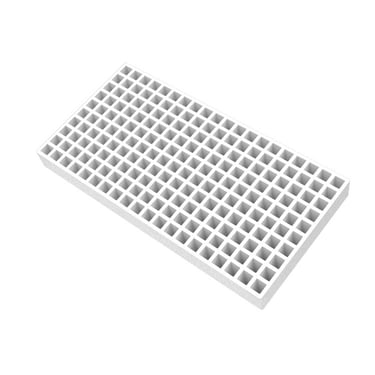
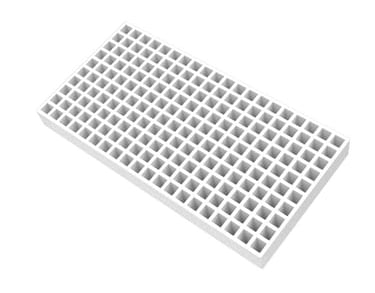
A common issue with lower-grade floating rafts is uneven waterlogging. If a tray sits too deep, the seeds drown; if it floats too high, the substrate dries out. Our EPS foam trays are precision-molded in two optimal dimensions—560mm × 355mm × 60mm and 670mm × 340mm × 60mm. The 60mm thickness is calculated precisely to balance the structural weight and plant load, ensuring the tray floats evenly on the water surface. This allows the bottom of each cell to maintain perfect, consistent contact with the nutrient solution.
3. From 50 to 480 Cells: Matching Your Density and Automation Needs
Different farm setups require different density strategies. For automated transplanting lines or high-density early-stage propagation, smaller cell counts like our 380-cell or 480-cell configurations maximize greenhouse space. For growers looking for larger root plugs before transitioning to final grow holes, we offer 50, 78, 120, 160, and 200-cell options. The tapered cell walls are designed for smooth plug extraction, reducing transplant shock and root tearing during the move to the main grow channels.
4. Built for Commercial Reuse and Operational Handling
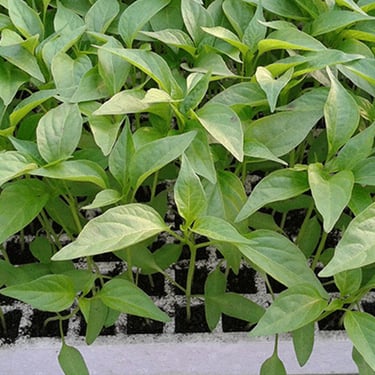
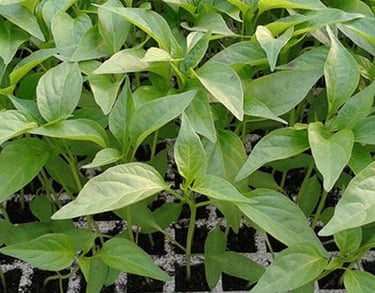
Lightweight handling shouldn't mean fragile performance. Our white EPS trays are structurally rigid enough to withstand repetitive manual lifting, cleaning, and sanitization cycles without cracking or bending like conventional plastic. With a low minimum order quantity (MOQ) of just 10 pieces, we support both pilot testing for expanding facilities and container-load scaling for established commercial farms.


Let’s Optimize Your Germination Setup
Choosing the right cell count and tray dimensions depends heavily on your specific water system, seeding machinery, and turn times.
If you are currently planning your next lettuce cycle or upgrading your DWC infrastructure, feel free to reach out to me directly at richard@seedlingtrayexperts.com or via WhatsApp at +86 15205190013. Let's look over your nursery layout together and find the exact specification to improve your farm's efficiency.
Quality
Wholesale seedling trays for plant propagation needs.
Expertise
Service
richard@seedlingtrayexperts.com
+86 15205190013
© 2008-2025. All rights reserved. Suzhou Keyanuo Plastic Co., Ltd Copyright. Privacy policy. Terms and conditions.